Backups: open it, first login, settings, fixes
· Updated 18 September 2026 · SparkBox team
Back up your SparkBox data and media to cloud providers (S3, Backblaze B2, Google Drive, Dropbox, WebDAV) or local storage. Incremental, versioned, and AES-256 encrypted by default. This is the short card for it — the two minutes after you press Enable, and the page to come back to when something is off.
Before you turn it on
Set up your first backup job via the web UI. Supports dozens of cloud providers out of the box.
Open it
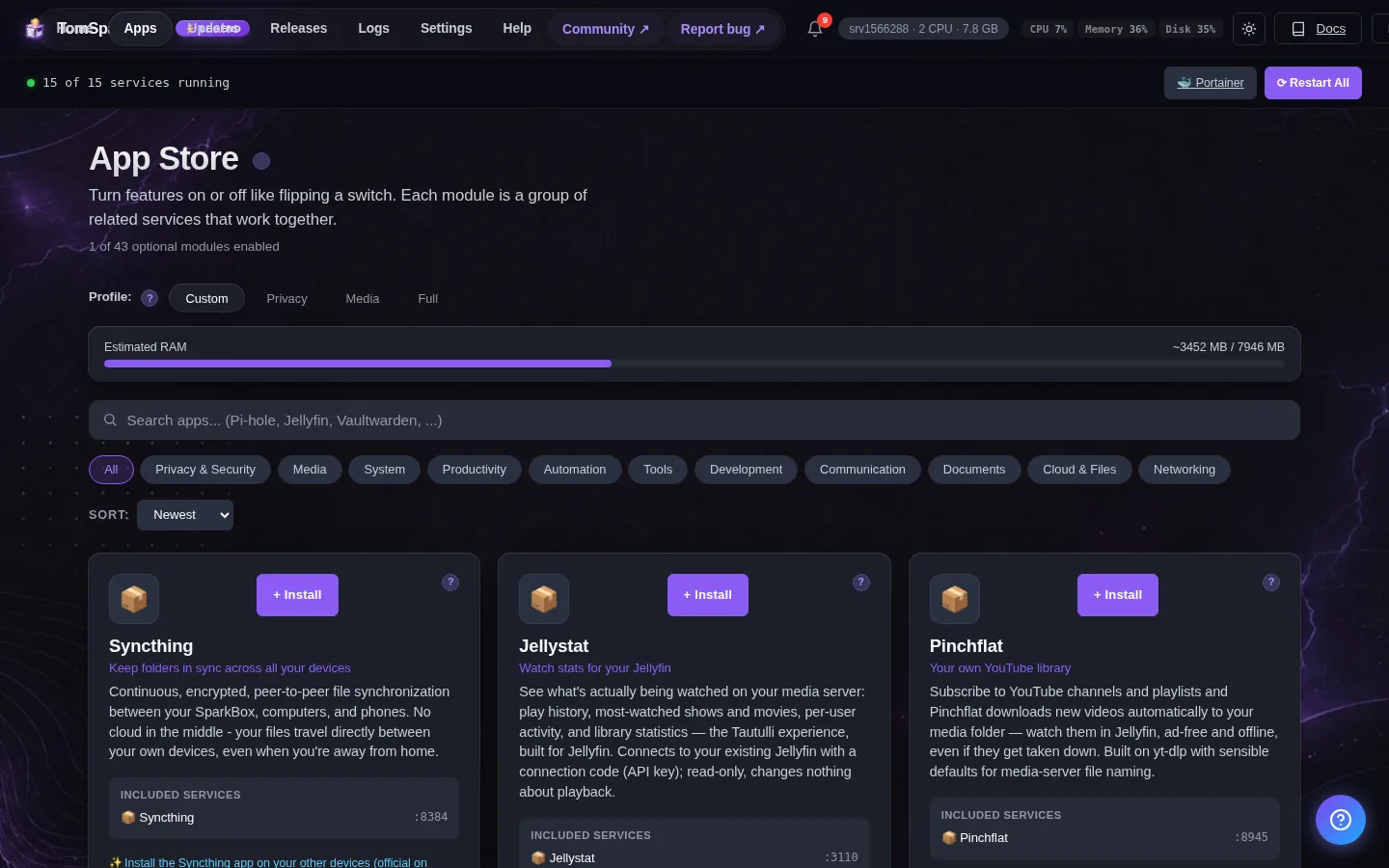
Dashboard → Apps → Backups → Open. The direct address on your network is:
http://<your-box-IP>:8200Create a new backup job, point it at /source (your SparkBox state) and choose a cloud destination
First login
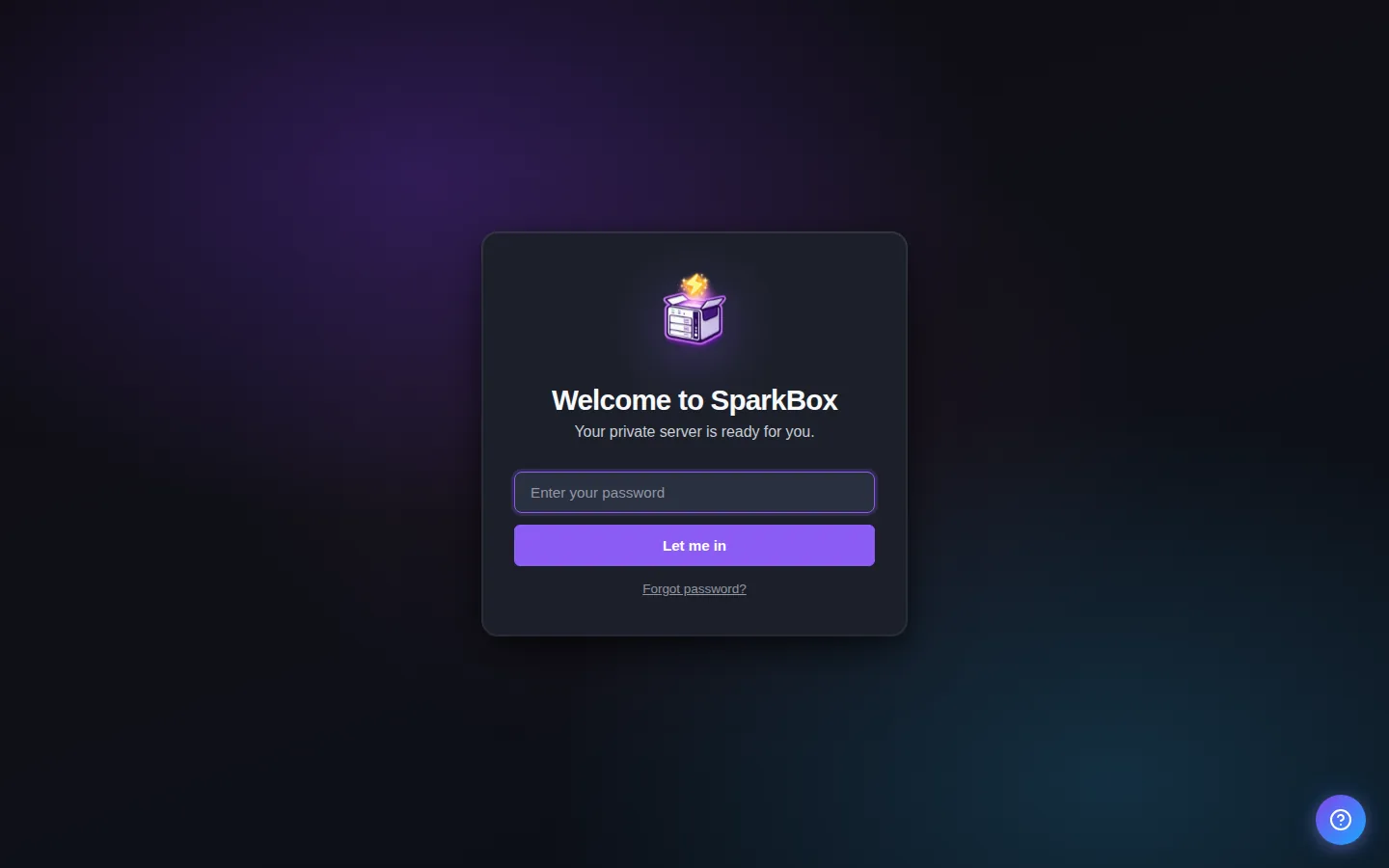
Duplicati asks for the Web UI password you set when enabling the module - it's also listed in your SparkBox dashboard under Settings. There's no username, just the password.
Any password the installer generated for you is under Settings → Passwords; the Open button offers to copy it.
Settings that matter
Change these under Apps → Backups (or when you enable it):
- Duplicati Web UI Password — Password for the Duplicati web UI (required)
How this fits with SparkBox's built-in backups
SparkBox's dashboard already makes scheduled backups of your app settings and databases ONTO the box itself - that protects you from a bad update, not from the box dying. This module (Duplicati) is the off-site half: it copies your data somewhere that isn't your SparkBox - a cloud bucket, another machine, or a USB drive. The honest rule of backups: until a copy exists off the box, you don't have a backup, you have one disk full of hope.
Create your first backup job
In Duplicati click Add backup, then Configure a new backup. Give it a name and a strong encryption passphrase - WRITE THE PASSPHRASE DOWN SOMEWHERE SAFE; without it the backup is unreadable by design, and nobody can recover it for you. For Destination pick your provider (Backblaze B2 is cheap and works well; S3, Google Drive, Dropbox, WebDAV and a plain local folder all work). For Source data, tick folders under /source - that's your SparkBox, mounted read-only: /source/data is your app data and media libraries, /source/sparkbox-state and /source/sparkbox-env hold the settings and passwords a rebuild would need. Start small: sparkbox-state plus sparkbox-env is tiny and rebuild-critical. Add /source/data later once you've watched a run succeed - a first run over hundreds of GB can take days on a home upload connection, and that's normal.
Test a restore before you trust it
A backup you've never restored from is a guess. After your first job finishes, click Restore, pick one small file, and restore it to a scratch folder. If that works, your passphrase is right and the destination is real. Do this once - it takes two minutes and turns 'I think I have backups' into 'I know I do'.
When it breaks
If it will not open, check the app card first — a red dot means it is restarting or unhealthy, and this walkthrough reads the reason from its log. Tom AI on the dashboard can do the same for you.
Where your data lives
/opt/sparkbox/modules/backup/config/Included in the dashboard's Backup by default. Restoring that backup on a fresh install brings Backups back exactly as it was.
Questions, or did this not match your box?
Every guide here came from a real problem someone hit. If yours behaves differently, say so — that is how these get corrected, and how the fix gets prioritised.
We answer there rather than in a comment box, because that is where the people who have already solved it are.